Showing posts with label Books. Show all posts

Sunday, July 08, 2007

Echo Park by Micheal Connelly

Micheal Connelly, creator of 11 Harry Bosch novels, is out with Echo Park, which finds the detective, now nearing 60, in the Open-Unsolved Unit of the Los Angles Police Department. This time around Bosch, with his ox-like detective skills intact, has to match wits with a serial killer he has been hunting for 13 years. He has to also come to terms with his own guilt in letting the killer Raynard Waits slip past him and murder seven more women, all of them prostitutes and runaways.
Connelly, a former crime reporter with LA Times, has all through this remarkable series let Bosch age in real time from his early 40s. The detective, who first appeared in 1992’s The Black Echo is named after the famous 16th century painter Hieronymus Bosch and is unlike any other in modern crime fiction. The quality that endears the average reader to Bosch is not his stunning intelligence like say, Hercule Poirot, but his ability to plough against the odds. Add to this the devil-may-care attitude and courage bordering on recklessness, the combination is irresistible.
This recklessness costs Bosch his girl in this book. Rachel Walling, the FBI agent, who helps Bosch nail Waits finally leaves him saying she can’t live with someone she knows may not return home that night.
The murder Bosch is investigating is of Mary Gesto, which has haunted him for years. Her “murder book” sits on Bosch’s table where he keeps reading it in fear that he may have missed a clue. When the public prosecutor’s office calls him to confirm the confession of the serial killer Raynard Waits, Bosch has to come face to face with the man he dreads. Reynard means a male fox and he is caught near Echo Park while transporting the cut-up bodies of two dead women. He has confessed to nine murders in return for a lesser lifetime sentence that his lawyer is bargaining for.
Connelly is at his best writing the police procedural. Though his latest offering has enough political intrigue and legal drama, at the end it is the author’s intimate knowledge of flatfooted police work that is most attractive. As layer after layer of lies and deception peel off, the reader is left open mouthed with surprise and admiration.
Connelly unlike many masters of crime fiction isn’t insular to politics. That this thriller is set against the election of the public prosecutor of Los Angles gives the author ample chance to dabble in democracy. Often enough, Connelly’s books have also targetted the Los Angles Police Department. Echo Park is no different.
His unsentimental, straightforward narrative style has kept Connelly, a self-confessed admirer of the inimitable Raymond Chandler, at the forefront of American crime fiction. His books have been widely translated – 31 languages at last count – and continue to be bestsellers. He has also won the Edgar and Anthony awards.
Though Connelly has often charted outside the Bosch territory, most notably with The Poet in 1996, he keeps returning to the “true detective”. What attracts both author and reader to Bosch are the same qualities. Like his namesake, Bosch may be fighting the eternal darkness, but his uprightness keeps our faith in life alight and burning.

Monday, March 19, 2007

Playing paperback

I rarely play tag. But this is simply too juicy to pass. The rules of this particular game are here. Shainu is also playing.

1. The Da Vinci Code (Dan Brown) Read, saw it.
2. Pride and Prejudice (Jane Austen) Saw it, tried reading it.
3. To Kill A Mockingbird (Harper Lee) Read, watched
4. Gone With The Wind (Margaret Mitchell) Saw
5. The Lord of the Rings: Return of the King (Tolkien) Read, Saw again and again
6. The Lord of the Rings: Fellowship of the Ring (Tolkien) Read, Saw again and again
7. The Lord of the Rings: Two Towers Read, Saw again and again
8. Anne of Green Gables (L.M. Montgomery) ??
9. Outlander (Diana Gabaldon) ??
10. A Fine Balance (Rohinton Mistry) ??
11. Harry Potter and the Goblet of Fire (Rowling) Read and saw
12. Angels and Demons (Dan Brown) Read
13. Harry Potter and the Order of the Phoenix Read
14. A Prayer for Owen Meany (John Irving) ??
15. Memoirs of a Geisha (Arthur Golden) Saw
16. Harry Potter and the Sorcerer’s Stone Read and saw
17. Fall on Your Knees(Ann-Marie MacDonald) ??
18. The Stand (Stephen King)??
19. Harry Potter and the Prisoner of Azkaban Read, saw again and again
20. Jane Eyre (Charlotte Bronte) Want to
21. The Hobbit (Tolkien) Want to
22. The Catcher in the Rye (J.D. Salinger) Read
23. Little Women (Louisa May Alcott) Want to
24. The Lovely Bones (Alice Sebold) Want to
25. Life of Pi (Yann Martel)Read
26. The Hitchhiker’s Guide to the Galaxy (Douglas Adams) Want to
27. Wuthering Heights (Emily Bronte)Want to
28. The Lion, The Witch and the Wardrobe (C. S. Lewis) Saw
29. East of Eden (John Steinbeck) Read
30. Tuesdays with Morrie(Mitch Albom) ??
31. Dune (Frank Herbert) Reading
32. The Notebook (Nicholas Sparks)Saw
33. Atlas Shrugged (Ayn Rand) Read
34. 1984 (Orwell) Tried
35. The Mists of Avalon (Marion Zimmer Bradley) ??
36. The Pillars of the Earth (Ken Follett) Read
37. The Power of One (Bryce Courtenay) ??
38. I Know This Much is True(Wally Lamb) ??
39. The Red Tent (Anita Diamant) ??
40. The Alchemist (Paulo Coelho) No
41. The Clan of the Cave Bear (Jean M. Auel) ??
42. The Kite Runner (Khaled Hosseini) Want to
43. Confessions of a Shopaholic (Sophie Kinsella) ??
44. The Five People You Meet In Heaven (Mitch Albom) ??
45. Bible (...) Read
46. Anna Karenina (Tolstoy) Want to
47. The Count of Monte Cristo (Alexandre Dumas) Read
48. Angela’s Ashes (Frank McCourt) Want to
49. The Grapes of Wrath (John Steinbeck) Read, want to see
50. She’s Come Undone (Wally Lamb) ??
51. The Poisonwood Bible (Barbara Kingsolver) ??
52. A Tale of Two Cities (Dickens) Want to
53. Ender’s Game (Orson Scott Card) ??
54. Great Expectations (Dickens) Read, saw
55. The Great Gatsby (Fitzgerald) Want to
56. The Stone Angel (Margaret Laurence) ??
57. Harry Potter and the Chamber of Secrets (Rowling) Read, saw
58. The Thorn Birds (Colleen McCullough) Want to
59. The Handmaid’s Tale (Margaret Atwood) Want to
60. The Time Traveller’s Wife (Audrey Niffenegger) ??
61. Crime and Punishment (Fyodor Dostoyevsky) Reading
62. The Fountainhead (Ayn Rand) Read again again
63. War and Peace (Tolsoy) Tried
64. Interview With The Vampire (Anne Rice) Saw
65. Fifth Business (Robertson Davis) ??
66. One Hundred Years Of Solitude (Gabriel Garcia Marquez) Want to
67. The Sisterhood of the Travelling Pants (Ann Brashares)Want to
68. Catch-22 (Joseph Heller) Read, want to see
69. Les Miserables (Hugo) Read
70. The Little Prince (Antoine de Saint-Exupery) Read
71. Bridget Jones’ Diary (Fielding) Saw
72. Love in the Time of Cholera (Marquez)Want to
73. Shogun (James Clavell) ??
74. The English Patient (Michael Ondaatje) Saw, want to read
75. The Secret Garden (Frances Hodgson Burnett) ??
76. The Summer Tree (Guy Gavriel Kay) ??
77. A Tree Grows in Brooklyn (Betty Smith)??
78. The World According To Garp (John Irving) ??
79. The Diviners (Margaret Laurence) ??
80. Charlotte’s Web (E.B. White)??
81. Not Wanted On The Voyage (Timothy Findley) ??
82. Of Mice And Men (Steinbeck) Read
83. Rebecca (Daphne DuMaurier) Want to read, see
84. Wizard’s First Rule (Terry Goodkind) ??
85. Emma (Jane Austen)
86. Watership Down(Richard Adams) ??
87. Brave New World (Aldous Huxley)Want to
88. The Stone Diaries (Carol Shields) ??
89. Blindness (Jose Saramago) Want to
90. Kane and Abel (Jeffrey Archer) Read
91. In The Skin Of A Lion (Ondaatje) ??
92. Lord of the Flies (Golding) Want to
93. The Good Earth(Pearl S. Buck) Read
94. The Secret Life of Bees (Sue Monk Kidd)Want to
95. The Bourne Identity (Robert Ludlum) Read, saw
96. The Outsiders (S.E. Hinton) ??
97. White Oleander (Janet Fitch)??
98. A Woman of Substance (Barbara Taylor Bradford) Tried, Yukk
99. The Celestine Prophecy (James Redfield) ??
100. Ulysses (James Joyce) Want to

Saturday, February 17, 2007

Poet Salma wins top literary award

Literary events are a little unusual on this blog, but here goes...

Poet and novelist Salma was on Friday awarded the Amudan Adigal Literary Award at a simple function in New College in Chennai. Ms Salma, who won the award for her contribution to Tamil literature that includes a collection of feminist poems, a novel and a few short stories, said her writings were mostly based on her own experiences. She said her experiences were not hers alone but that of each and every woman. Read more here.

Tuesday, November 07, 2006

Great Movies - Roger Ebert

One of the world's most famous film critics chooses the 100 best films of all time. The book is a compilation of his columns written for the Chicago Suntimes. There are no films on the list that are boring, which goes to say a lot about the list. Because if you choose films like Birth of a Nation, which in the 1920s was a landmark film, then you end up making the list very boring. Ebert does well to give those sort of films a miss, carefully choosing movies which are both personal and popular choices. Mr Hulot's Holiday would be a rare example of a totally personal choice.
Ebert also has a prose that is a gift. Most critics writing about film have this high brow style that half the time you don't know what the hell they are talking about. Ebert keeps it simple, straightforward, interesting and gives you all the highlights. He also points out the stuff that is not so obvious.
In a second book, Ebert listed another 100 movies that are a must watch. All the reviews are available online here.

Wednesday, November 01, 2006

Satyajit Ray's Stranger: Stories

Stranger: Stories is a collection of 19 short stories and a short novel by Satyajit Ray. Gopa Majumdar has translated them into English. This is really reading meant for children, but when has that deterred me?
Most of these stories, as Majumdar says, have a supernatural element running through them. Though the stories are not scary, they are filled with strange happenings – hence the name.
The short novel Fotikchand, the story of a kidnapped boy who suffers from amnesia, is perhaps the weakest in the book. Long passages seem to be included in this novel for some strange reason. Perhaps, Ray did not mean for it to be a pure thriller.
The stronger stories have only a few characters and end with a neat twist. But in many stories, characters pop up without any major attempt on the part of the author to provide them with character. Mostly, they are used merely as devices to further the plot.
Many of these stories have children as main characters. Some of these are formulaic – meaning they follow the same path, ending with an inexplicable, mysterious happening, which is often logical only within the premises of the story.
What is appealing is the simplicity of the stories. I wanted them to be complex, but Ray, who was as complex as filmmakers get, shuns this quality as a short story writer. May be he did this because he was writing for children. While this collection acquaints us with Ray’s versatility and interest in various fields, it is not a testimonial to his writing skills.
The story titled Stranger was made into a film Agantuk, Ray’s last.

Thursday, October 19, 2006

3: Ezhuthil Vazhpavan Antro Naan

Madhumita had posted two of Sundara Ramaswamy's poems when he died on October 14, last year. Now, more than a year later, she posts a Q&A from one of SuRa's books, Vazhga Sandegangal.

Chenthil has translated a poem into English.

Monday, October 16, 2006

My grandpa's library

The world of books is a strange, exciting place to get lost in. At home, books were never is short supply. I think there are two kinds of homes: one in where parents want their kids to read books, where mom's ecstasy is in watching her kid read. She bores the neighbours and relatives about the kind of books her child prodigy reads. Mine was such a home, though as you can probably make out, I was never a prodigy.
The other kind of home is where bookworms are losers. Parents want their kids to be street smart and worldly wise, and there is no manual, no tome, for that yet, is there?
The truth, of course, lies somewhere in between. Books offer you an experience and open up a world that may not accessible for you otherwise. Like say, Robinson Crusoe. Even if you are lucky enough to get stranded in an island, you are unlikely to find a servant as amiable as Friday. But the things that friends, relatives and neighbours can teach you are sometimes so profound that they make books look like a thing made of paper and ink (which is what it doesn’t look like most other times).
I didn’t have a library of my own. I lost most of my books once I was through with them. I gave some to my nephew. But quite a lot didn’t make it with me to adulthood.
But I don’t regret that much. Books are such a pain to keep. What I truly like is being in a library – like a public library or BCL. There you have the books wonderfully kept by other people for you. All you got to do is go there and borrow them.

Now let me get to the story I want to tell. This is the story of a library filled mostly with books that I have not read. Sundara Ramaswamy, a Tamil writer, had probably the biggest library in my hometown. He is also my grandfather. And yet for years – all through adolescence in fact – I did not read one book from his collection.
My dose of Hardy Boys, Alfred Hitchcock presents, Agatha Christie, Erle Stanley Gardner, Sidney Sheldon and Harold Robbins came from elsewhere – cousins, dad, a lending library, everywhere except from grandpa.
There is a good reason for this. His collection had the classics in it. Like say, War and Peace. I plodded through some 250 pages before giving up. It was a killing bore. He had Carlos Castaneda. Even my dad loved this guy's books. But as a 12-year-old when I tried reading them, I had the most bizarre feeling. I could understand every word but no sentences.
After a while, I understood that there was another world – that of literary books. The differences between the two kinds still escape me, but there are literary books for children too. Like The Prince or even good old Crusoe.
And oddly enough I wasn’t introduced to the literary world by any English book. When I read English I kept moving on to Chase, Crichton and the like. It was a Tamil book – one my grandpa's own - J.J. Sila Kurippugal that introduced me to that world. That opened up a few shelves from the library that had remained elusive for so long.
One day I asked Grandpa about the books he had in the library. He asked me what my favourite book was? I named a book by Sheldon, The Other Side of Midnight, which I had read some 20 times with feverish excitement. To my surprise, he wasn't dimissive of the Sheldon book at all. He said that even Sheldon would have shaped my reading and language in some way.

"But experiences that such books offer stop at some point. But many books I have try to go further and explore new territory," he said. I wasn't so much impressed by the way he defined books in his library as much as the way he spoke about the writers I was reading, who wrote pulp or detective fiction.
That's because SuRa wasn't that kind of a writer at all. None of the devices Sheldon or any of the other writers I named use can be seen in any of SuRa's work. Many of the stories are not even plot driven. Neither are they laced with sex. And many of SuRa's stories do explore new territory.
I later found that he shared my opinion of the classics. Or perhaps a widespread snobbish opinon of the classics. After seeing me read Catcher in the Rye, he asked me how I liked it. I said it not like a classic and it wasn't boring at all. He had just that year completed Kuzhanthaigal Pengal Aangal. "Perhaps, I should write a boring novel. Then everyone would say I have written a classic," he said with a smile.

The library that I so admired wasn't made in a day. From his trips around the world, grandpa brought back books, often choosing them above other things he needed to carry.
Just a year before he died, grandpa was able to move the libary - scattered among various rooms in the house - to one large hall on the first floor in his house in Nagercoil. On many days, he would stand in the library flipping through the books. Like many of the books he has written, the books he owned are also a part of his legacy. At least they are now. Last Saturday, the library was thrown open to the public. The address is here: 669, K.P.Road, Nagercoil - 629001.

Friday, October 13, 2006

Tell a story, win a prize?

If Kiran Desai won the Booker for her book on immigration and issues associated with it, then Orhan Pamuk won the Nobel for rebelling against his homeland, Turkey. Shouldn't writers be winning awards for writing good stories?

Wednesday, October 04, 2006

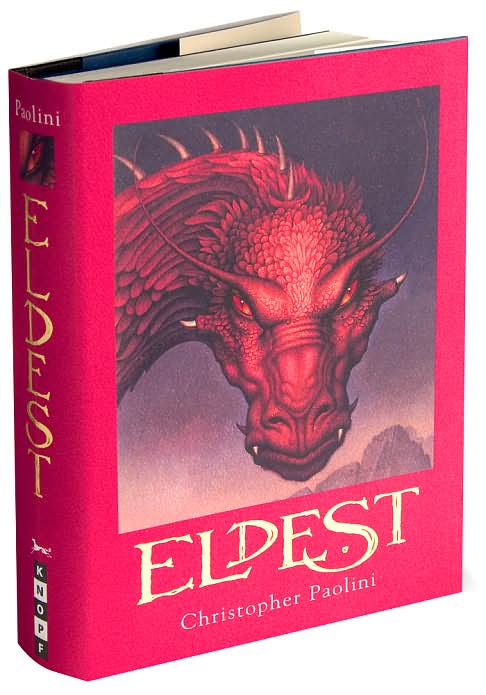
Eldest - Christopher Paolini

"Christopher Paolini was only 15 when he began writing Eragon, the best-selling book that would change his life. The book was published when he was 19, causing book reviewers to enthusiastically call him a whiz kid and teenage sensation. Mr Paolini's young age, however, is never once betrayed in his writing. In fact, the book seems mature beyond his age."

My full review of Eldest is here.

Sunday, September 24, 2006

What am I reading?

Why do people put up "What am I reading?" posts for? Same reason they blog. To connect.

I am reading:
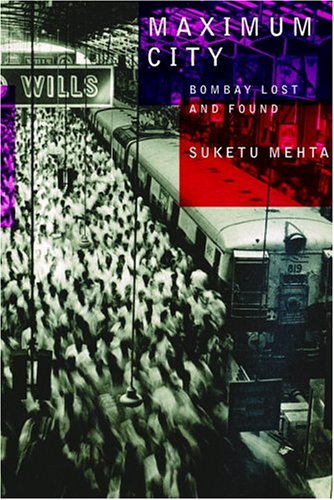
Maximum City - I don't have to say anything about this book. It's nice, it gets into the heart of the city and it's damn well written. You breathe Mumbai on the days you read the book.

Dune - After a while it feels like having sand on your eyes. Much like after I watched Lawrence of Arabia. Expresses the ecological concerns of the time in which it was published - 1965. David Lynch made a movie, which I think he later disowned. But many Dune fans loved it. Up there with Foundation, I, Robot and Blade Runner. Or Lord of the Rings even.

Tuesday, August 15, 2006

Booker Longlist

This a note to myself. Don't accuse me of doing a cut and paste job. I was a bit aghast that I haven't heard of even one book in this list. The Booker Longlist follows, guys:

Carey, Peter Theft: A Love Story (Faber & Faber)
Desai, Kiran The Inheritance of Loss (Hamish Hamilton)
Edric, Robert Gathering the Water (Doubleday)
Gordimer, Nadine Get a Life (Bloomsbury)
Grenville, Kate The Secret River (Canongate)
Hyland, M.J. Carry Me Down (Canongate)
Jacobson, Howard Kalooki Nights (Jonathan Cape)
Lasdun, James Seven Lies (Jonathan Cape)
Lawson, Mary The Other Side of the Bridge (Chatto & Windus)
McGregor, Jon So Many Ways to Begin (Bloomsbury)
Matar, Hisham In the Country of Men (Viking)
Messud, Claire The Emperor’s Children (Picador)
Mitchell, David Black Swan Green (Sceptre)
Murr, Naeem The Perfect Man (William Heinemann)
O’Hagan, Andrew Be Near Me (Faber & Faber)
Robertson, James The Testament of Gideon Mack (Hamish Hamilton)
St Aubyn, Edward Mother’s Milk (Picador)
Unsworth, Barry The Ruby in her Navel (Hamish Hamilton)
Waters, Sarah The Night Watch (Virago)

Well, how many have u heard of? Have you read anything at all? Do you read? Answer me......

More details are here.

Tuesday, May 02, 2006

A curious review


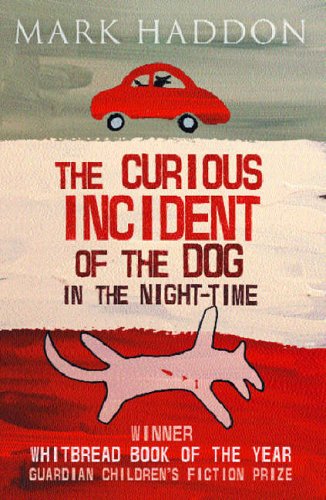
Christopher Boone, a 15-year-old living in a small town in the UK, suffers from Asperger's Syndrome, an autistic condition. He has two gifts: a photographic memory and he is a whiz at maths.
But on the negative side he just can't understand emotions. Metaphors like "He is the apple of my eye" go above his head. He finds people confusing. And because of all this, he is, in a way, an unreliable narrator.
But Christopher can't tell lies. He seems incapable of doing so. In using him as his narrator, Mark Haddon, in a light-hearted, warped and funny fashion, makes a commentary on adult relationships, particularly the failed marriage of Christopher's parents.
Christopher claims he can't tell jokes. He says he doesn't understand them. But the book itself is quite funny. Plumbing Christopher's innocence to its full potential, Haddon offers a delightful criticism of the oddities of human life.
Christopher doesn't like to be touched. He hates yellow and brown, and can't eat anything in that colour. He constantly dreams of going into outer space. Christopher loves Sherlock Holmes but hates its author Arthur Conan Doyle for his superstitious beliefs. He is investigating the murder of Wellington, the dog that lived across the street, which is gruesomely killed using a garden fork. But this investigation is really not into the murder of a dog, which is clear even as you begin reading the book. This is just a pretext to portray the life of an autistic person and of a world seen through his eyes.
For instance, Christopher often recalls his harrowing journey to France. He says that he was unable to relax like other people because he sees everything. At one time, there is a detailed description of every cow that stand in a group on a field. Christopher's memory is indeed that photographic.
The book is filled with pictures, maps, puzzles, digressions, and is a seemingly hotchpotch affair. But these are actually devices used to offer an insightful glimpse into the life of a boy suffering with Asperger's, though the disease is never mentioned by name in the book.
Christopher lives with his father, as his mother is dead (or is she?). Halfway through the book, Christopher learns who killed Wellington and why. It's then that the book really takes off and begins to talk of the things that it wanted to say in the first place.
By the time the book ends, we realise that Christopher, for all the lack of emotional IQ, innocence and naivety, is actually a model for decent and practical adult behavior.

(When I put this up on desicritics.com, I was rapped for writing a synopsis and not a review. I agreed and then decided on this title. It's all a mess anyway.)

Thursday, February 16, 2006

Raven Kingdom


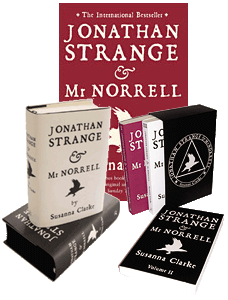
Jonathan Strange and Mr Norrell

Susanna Clarke

Price (Hardcover): Rs 809.10

Bloomsbury


LAST year, Bloomsbury unleashed on the English-speaking world its biggest marketing campaign for a single book. That the publishers also brought out the phenomenon called Harry Potter was not missed and Jonathan Strange and Mr Norrell quickly went on to become a best seller.
In the light of J K Rowling's success, fantasy, at least in books, had found a new life. This enabled Susanna Clarke, a cookbook writer turned author, to spend a decade writing a book that would be billed as Harry Potter for adults.
But Clarke owes almost nothing to Rowling; instead her style is a marriage of Jane Austen and Charles Dickens. Her attempt is to write a magical history of early nineteenth century England. With the help of 185 footnotes which provide the deep background to the story, she sets about telling her tale in a dry but delightful tone.
JONATHAN Strange and Mr Norrell is set in Regency period (early 19th century) in England. Magic has almost been reduced to a memory and the country has no more magicians. Enter then Mr Norrell, a reclusive magician with a library full of magical books, who arrives in London with the sole intention of single-handedly restoring magic to its ancient glory.
Magic has become rather ungentlemanly so the public remains sceptical until an important official's fiance is brought back from the dead by Mr Norrell using black magic which would later have disastrous consequences. The government quickly finds him useful in its long, drawn out war against Napoleon.
As Mr Norrell's feats of magic become famous, many young men through out the land become eager to learn this new profession. Jonathan Strange, a country squire, acquires a prophecy through luck and soon becomes Mr Norrell's only student. Though the mentor grows to become extremely fond of his student, Strange's ambitions eventually outgrow his teacher's. He travels to Portugal and helps the English military campaign there.
But Mr Norrell, who is paranoid about another magician challenging him, denies Strange access to his library, which causes the two men to fall out. Strange decides to go on his own way - he is fascinated with the legend of the northern king, John Uskglass also known as the Raven King and wants to learn about the faerie lands. His loses his much beloved wife and his attempt to recover her end in a climatic battle with unknown powers, in which he is finally joined by Mr Norrell. More....
CLARKE takes a hundred pages to set the milieu of the tale, but once in, the reader is hooked. Clarke's magic is more like an experiment performed in a physics or a chemistry lab. Given the methodology and materials, you can do it as good as Mr Norrell.
None of her characters are purely good or evil, including the protagonists. The indifferent and thuggish John Childermass, the irascible Lascelles and the hesitant black butler Stephen are no heroes. Clarke offers them no place for virtuous, self-righteous behaviour; they are all exploitative, cunning and resourceful, more interested in survival than in moral principles.
Indeed, some may perceive the lack of heroes to be a drawback. There is nobody here that you can root for and that added to Clarke's deliberate, dull tone can drive some up the wall. Clarke is not quite so successful as say, Tolkein, in transporting you into an another world, a criterion with which many judge a work of fantasy. Some episodes between the black butler and the ``gentleman with thistle-down hair'' drag and the deliberate obtuseness of the plot is sometimes maddening. Clarke's archaic spelling of some words like chuse and shew, used to give a flavour of Old English, is more likely to hinder than help readers.
Add to this the total lack of sexuality in the book; Much like Tolkein's characters, Clarke's too are devoid of sexual feelings. Even Strange's love for his wife Arabella, a central thread of the story, is sterile.
But Clarke's dry humour and her literate, knowing descriptions of early 19th century London and her understanding inhabitants more than redeem the novel.
London society and mannerisms are described with such authenticity that one ends up wanting to believe that magic actually existed in this age. The author adopts not the tone of a high-brow writer, but the gossipy manner of the neighbour sharing with you the city's happenings. She is also mildly (and sometimes this mildness is used with devastating effect) sarcastic of her characters' ideas and their life.
BOTH Mr Norrell and Strange are well fleshed out characters, but they pale before Clarke outstanding creation: The Raven King. Though only a presence, this human brought up by fairies who later invades England is as chilling as he is intriguing.
Strange's obsession with him, which begins soon after the Napoleonic wars, is superbly plotted, giving the book its racy and startlingly fast-paced climax. The last 200 pages of the book, in sharp contrast to all that came before, are a riot, with the author letting loose her imaginative and narrative power. It's impossible not to be gripped by Strange's feverish attempts to invoke the Raven King, as he fights the madness and darkness surrounding him. Clarke's book is a remarkable debut, a clever work of sophistication filled with rich metaphors. The book's size make you work hard for its pleasures, but plough ahead and you will be rewarded.

There is news that a film on the book is to be made.


Wednesday, February 15, 2006

Tribute to Sura


MY grandfather Sundara Ramaswamy, who died over a month ago, leaves behind a rich legacy shaped by his written works — novels, poems, short stories, critical essays. But for me, he was just Grandpa.
My earliest memories of him are of a bald man sitting in his room, a wall entirely made of glass, loudly dictating Tamil words, to the clang of the typewriter. Sentences would jump out of him, the typewriter would struggle to keep up, and words would start again. When permitted inside the room, I always found it boring in a few minutes.
He was strict and unapproachable, more in my imagination than in reality. Most of my holidays I spent in his house, but I tried hard to avoid him. There would always be some small sin I had committed that he was bound to pull me up for. His idea of playtime was colouring books, mine included violent games, the victim usually being my brother.
I detested Tamil and never read anything outside of school work. His first short story that I read was a little known translation into English of Stamp Album. When I told him about it, he was surprised and asked for the book. He didn’t realise that the story had been translated. That incident left no impression on my mind. I thought compared to Sherlock Holmes, Stamp Album was nothing.
Then for years, he was absent from my life. I rarely visited my grandparents and for a time it seemed like I didn’t know them anymore. My father would keep mentioning JJ: Sila Kurippugal in his conversations about books. After one such conversation, I dusted a heavily marked first edition copy of the book from the loft and looked at it. I had never read a Tamil novel before and I seriously doubted I would read this one. The first sentence on JJ's death was striking. I was curious about how a writer could start a novel with his main character dying right in the first line. I kept reading and over three or four days finished the book.
I realised then that books do change your life. And for the first time in years, I wanted to meet my grandfather. I went over to his place and told him that I had read JJ. He wanted to talk but I grew shy. He said he would like to suggest a couple of books that I might like, but I somehow slipped away.
Years later, after my mother died and father became ill, I moved to my grandparents’ home. I read a lot of him during this time which gave me the confidence to ask him questions about his work, his idea of creativity and virtually everything under the sun. I joined him in his evening walks and we would have long conversations. Looking back, I realise that I was more naive that I thought I was and he was more patient than he needed to be.
He had a mind that always thought things through. He could with great style incisively analyse issues, a quality that make his essays valuable. But there are aspects to him like his conversations — funny, clever and poignant — that went unrecorded. He also laughed like no one else, his facial muscles completely loose, his mouth wide, his eyebrows as if frowning.
I remember talking to him when he had just begun his third novel — Kuzhanthaigal Pengal Angal. From random conversations to the manuscript to the published book, the creative process was fascinating. He approached it like a 10 to 5 job. Even 10 minutes away from his work affected him badly.
It was as if he had tons to say even after 50 years at it. He would always keep grumbling about distractions that keep him away from work. He had a spirit that wasn’t easily suppressed. From the way he exercised in the morning till in the night when he read himself to sleep, he displayed an enthusiasm for life that I envied.
One of the first things that my uncle Kannan did around the time he revived Kalachuvadu, the literary magazine, in the mid 90s, was to publish my grandfather's collection of poems. Unlike his other works, the poems kept growing on me with every reading. When dramatised or sung, these poems reveal a dimension to them that make me marvel at their writer.
He was in great health when he wrote the short stories collected in Maria Thamuvukku Ezhuthiya Kaditham in 2003. It’s hard to believe that barely two years later, he is no more.
When news that he had been admitted to hospital came, I grew restless. His voice when he had last spoken to me had been really subdued. Even after seeing his body in the casket at the funeral, the reality of his death never hit home. It was unreal to see people crying unabashedly and to walk among showering petals to the cemetery alongside his body.
My relationship with him was in many ways unfulfilled. I had somehow deluded myself to thinking that he would always be there. Today, I regret deeply that another conversation with him is impossible.
The day after his funeral, my six-year-old cousin imitated my grandfather's ritualistic arrival at the dining table for lunch. The door of his room would open, my grandfather would emerge humming a tune and walk the few feet to the large hall, switch on the fan and sit in his regular chair. None of us look at the time. It would always be 1 pm.
Most people, I think, go through life without ever having a shot at what they really want to do. My grandfather decided in his teens that he wanted to be a writer and pursued that path with rigour. Amidst all this sorrow, that’s one thing that makes me happy. Happy of his fulfilled life and our unfulfilled relationship.